Nat Commun (2026) 17(1): 9164. https://doi.org/10.1038/s41467-026-75915-8
Fast-growing intracellular Mycobacterium tuberculosis populations evade antibiotic treatment
Day, N. J.; Pradel, B.; Luk, C. H.; Santucci, P.; Fearns, A.; Rodgers, A.; Aylan, B.; Botella, L.; Vaubourgeix, J.; Ortiz Canseco, J.; Athanasiadi, N.; Gutierrez, M. G.
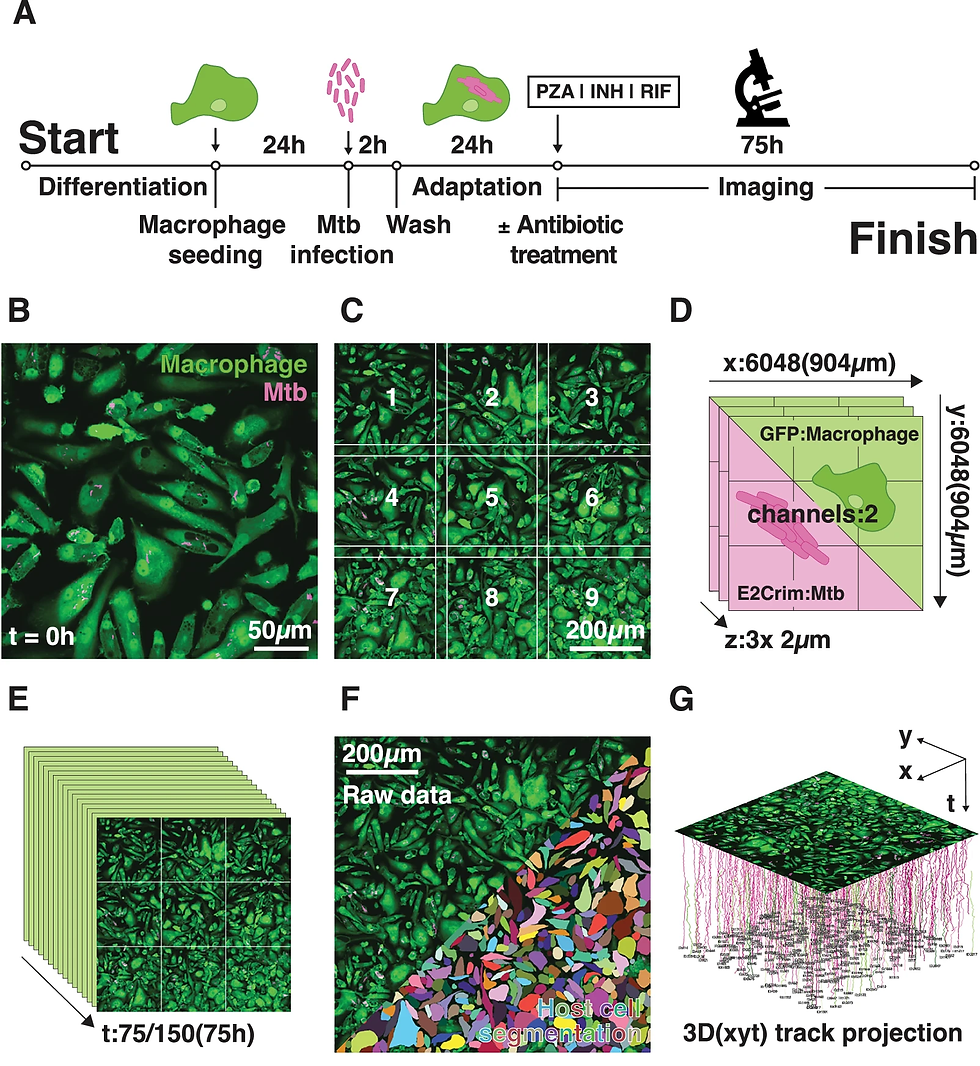
Slow growth rates are considered a hallmark of Mycobacterium tuberculosis (Mtb) and have been historically associated with persistence and subsequent drug tolerance. Despite the fundamental role intracellular growth plays in the pathogenesis of tuberculosis (TB), approaches that define intracellular growth rates have remained challenging. Here, we developed a high-throughput, live-cell imaging approach to quantify Mtb replication within human macrophage populations at high spatiotemporal, single-cell resolution. Unexpectedly, we discovered fast-growing intracellular Mtb populations with doubling times below 10 hours. Importantly, when treated with first-line antibiotics, these intracellular fast-growing subpopulations remained. To validate this in vivo, we developed a mouse model of tuberculosis featuring a Mtb-Timer fluorophore that reports replication activity. Single-cell analysis revealed a strong correlation between heavily burdened host cells and Mtb populations with heightened replicative activity. These data identify fast-growing intracellular bacteria as a mechanism of antibiotic evasion and challenges the prevailing idea that attributes antibiotic tolerance to bacterial dormancy.